 Chat with us

Call us now :08045802730
 Send Inquiry
 Send Inquiry
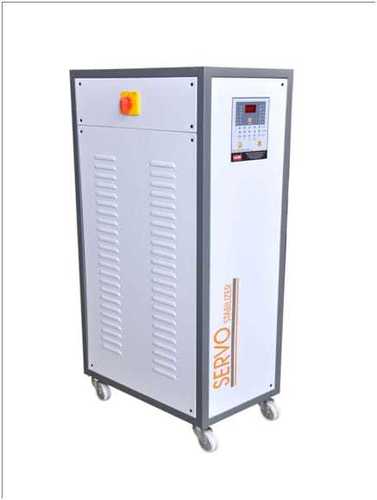
Industrial Voltage Stabilizers
Price 6000-2500000 INR/ Unit
MOQ : 1 , , Unit
Industrial Voltage Stabilizers Specification
- Input Voltage
- 340V - 480V AC
- Output Voltage
- 400V AC
- Efficiency
- 98%
- Frequency (MHz)
- 50 Hz
- Phase
- Three Phase
- Current
- Upto 1500 A
- Weight
- Approx. 350 kg
- Ambient Temperature
- 0C to 50C
- Control System
- Microprocessor Based Control
- Usage
- Industrial Power Equipment
- Design
- Robust Fabrication
- Insulation Resistance
- More than 2 M at 500 VDC
- Voltage Protection
- Under/Over Voltage Protection
- Display
- Digital Meter
- Dimension (L*W*H)
- Customizable
- Rated Power
- Up to 500 KVA
- Current Type
- AC
- Waveform Distortion
- Negligible
- Product Type
- Voltage Stabilizer
- Operating Humidity
- Up to 95% RH non-condensing
- Enclosure Protection
- IP 21 / IP 42
- Cooling Type
- Air Cooled / Oil Cooled
- Bypass Switch
- Manual/Automatic Inbuilt
- Input/Output Connection
- Copper/Aluminum Busbars
- Surge Protection
- Available
- Output Accuracy
- 1%
- Isolation Transformer
- Optional
- Mounting Type
- Floor Mount
- Alarm
- Audio/Visual for Fault Indication
- Correction Speed
- 35 V/sec
Industrial Voltage Stabilizers Trade Information
- Minimum Order Quantity
- 1 , , Unit
- Supply Ability
- 5 Units Per Month
- Delivery Time
- 1 Week
- Main Domestic Market
- Tamil Nadu, Kerala, Pondicherry
About Industrial Voltage Stabilizers
Industrial Voltage Stabilizer offered by is a widely used stabilizer, suited for industrial applications. This is used for the units of either L.T. or H.T. supply. The indoor and outdoor sites. Also, it is useful in the production of a steady output voltage with less vacillations in the input voltage. The Industrial Voltage Stabilizer is provided with many energy saving features, less breakdowns, outstanding protection of several types of electrical equipment as well as improved plant efficiency. Applications include Cold storage, Cement plant, Distilleries & beverages, Textile mills, Pharmaceutical Units, Food processing units, Paper mill, High Buildings Nursing Home & Hospitals etc.
Specification
| Type | Automatic |
| Phase | Three Phase |
| Input Voltage | Range I :340 - 465V ,Range II :295 - 465V ,Range III :240 -465V |
| Output Voltage | 400V |
| Type of Cooling | Oil Cooled |
| Capacity | 3 KVA to 1000 KVA |
| Operating Frequency | 47 - 53Hz |
| Working Temperature | 0 to 50 Degree Centigrade |
| Relative Humidity | 60% |
| Efficiency | 98% at Nominal Load |
| Correction Rate | 25/35/60 V per second |
Reliable Voltage Regulation for Industrial Applications
Our industrial voltage stabilizers ensure stable power delivery, safeguarding sensitive equipment from voltage fluctuations. Designed to support up to 1500 A current and rated for up to 500 KVA, these stabilizers maintain unwavering accuracy and reliability in challenging environments. The robust design and high insulation resistance enhance safety and durability, streamlining operations at manufacturing plants or industrial units.
Advanced Control and Monitoring Features
Engineered with a microprocessor-based control system and digital meter display, these stabilizers offer real-time monitoring and precise voltage control. The integrated audio/visual alarms, surge protection, and under/over voltage protection bolster plant safety while minimizing downtime. Manual and automatic bypass switches ensure maintenance flexibility without interrupting operations.
FAQs of Industrial Voltage Stabilizers:
Q: How does the correction speed of 35 V/sec benefit industrial operations?
A: The rapid correction speed of 35 V/sec enables the stabilizer to respond swiftly to voltage fluctuations, minimizing risk of equipment malfunction or downtime. This ensures uninterrupted operations and protection for sensitive industrial machinery.Q: What cooling options are available, and how do I choose between air cooled and oil cooled?
A: Both air-cooled and oil-cooled options are available. Air-cooled models are suitable for environments with ambient temperatures up to 50C, while oil-cooled units are preferred in higher-load or more demanding thermal conditions. Selection depends on application requirements, environmental factors, and cooling preferences.Q: When should the built-in bypass switch be used?
A: The inbuilt manual or automatic bypass switch should be used during maintenance or in the rare event of stabilizer malfunction. This allows the connected load to receive power directly without voltage regulation, ensuring continuous operation while the stabilizer is serviced.Q: Where can these voltage stabilizers be installed within industrial facilities?
A: These stabilizers are floor-mounted and can be customized in dimensions to fit various spaces within factories or power distribution rooms. The IP21/IP42 enclosure protection ensures safe operation in industrial environments with high humidity and dust.Q: What is the process for integrating these stabilizers into an existing power system?
A: Integration involves connecting the input/output copper or aluminum busbars to the facilitys power distribution network. The process is straightforward and can be managed by a qualified electrician, ensuring seamless compatibility with three-phase AC power systems.Q: How does the microprocessor-based control system enhance stabilizer performance?
A: The microprocessor-based control system delivers precise monitoring and rapid adjustment of output voltage, ensuring 1% accuracy. This intelligent control improves efficiency, enables detailed fault diagnostics, and enhances operational reliability in dynamic industrial settings.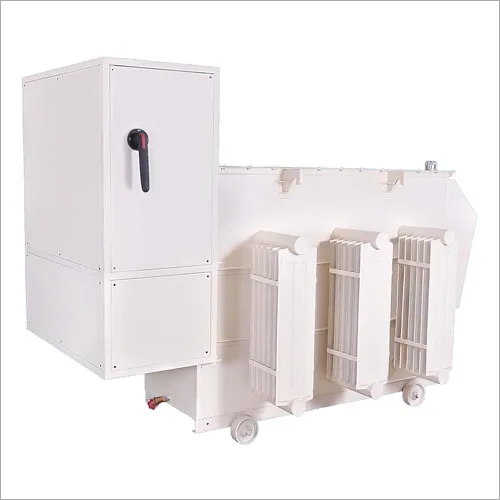
Tell us about your requirement

Price:
Quantity
Select Unit
- 50
- 100
- 200
- 250
- 500
- 1000+
Additional detail
Mobile number
Email

More Products in Servo Voltage Stabilizers Category
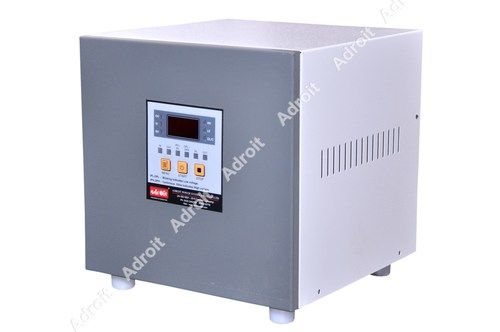
Stabilizer for Medical Equipment
Minimum Order Quantity : 1 Unit
Efficiency : 98%
Output Voltage : 230 +/ 1% Volt (V)
Frequency (MHz) : 4753 Hertz (HZ)
Input Voltage : 170270 Volt (V)
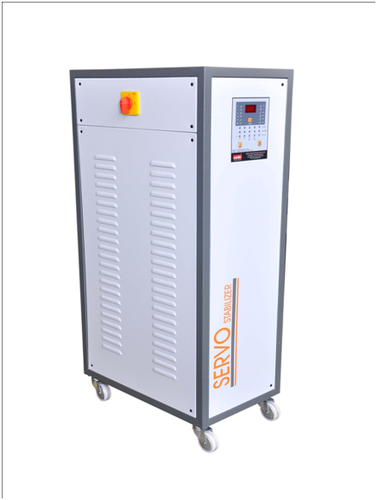
Three Phase Air Cooled Servo Stabilizer
Price 6000-2500000 INR / Unit
Minimum Order Quantity : 1 Unit
Efficiency : 98% at nominal load
Output Voltage : 400 +/1 % Volt (V)
Frequency (MHz) : 4753 Hertz (HZ)
Input Voltage : 295465 Volt (V)
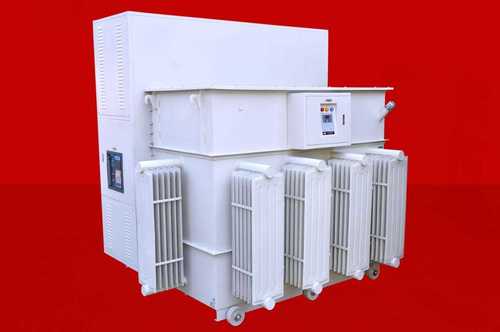
Bengaluru 800 KVA Adroit Make Three Phase Oil Cooled Servo Stabilizer
Price 6000-2500000 / Unit
Minimum Order Quantity : 1 Unit
Efficiency : 98% Approx
Output Voltage : 415V 1% AC
Frequency (MHz) : 50 Hz
Input Voltage : 340480V AC
Bengaluru 60 KVA Three Phase Air Cooled Servo Stabilizer
Price 6000-2500000 INR / Unit
Minimum Order Quantity : 1 Unit
Efficiency : 98%
Output Voltage : 400 V 1%
Frequency (MHz) : 50 Hz
Input Voltage : 340460 V

"We mainly deal in Andhra Pradesh, Karnataka, Kerala, Puducherry, Tamil Nadu, Telangana"

 Send Inquiry
Our Products
- Servo Voltage Stabilizers
- Electrical Isolation Transformers
- Online UPS
- Active Harmonic Filter
- Static Stabilizer
- Servo Stabilizer Ranges
- Over Voltage Cut-Off Device
- Centralized Power Safety Device
- Constant Voltage Constant Frequency Device (CVCF)
- Kerala Servo Voltage Stabilizer
- Surge Protection Device
- Automatic Phase Selector
- Auto Phase Selector
- SOLAR PRODUCTS
- Battery


S. F No. 343 & 344, Periyannan Nagar, Edayarpalayam Post,Coimbatore - 641025, Tamil Nadu, India

Mr J. Shanth Kumar
(Director)
Mobile :08045802730
 Send Inquiry
 Send SMS
 Call Me Free
Developed and Managed by Infocom Network Private Limited.


 English
 Spanish
 French
 German
 Italian
 Chinese (Simplified)
 Japanese
 Korean
 Arabic
 Portuguese